
The Future of Dental Implants:
From Digital Technology to 3D Printing
Introduction :
Tooth loss has always been one of humanity’s biggest challenges throughout history. In earlier times, simple solutions such as removable dentures or dental bridges were commonly used, but these methods came with many limitations. With advancements in science and technology, dental implants emerged as the best replacement for missing teeth. Today, implants not only restore the beauty of a patient’s smile but also play a key role in improving oral health, chewing ability, and overall quality of life.
But what does the future hold? With the arrival of digital technology, artificial intelligence, and 3D printing, the field of dentistry—especially dental implants—is undergoing major transformations. This article explores innovative trends and the future outlook of dental implant technology.
The Rise of Digital Technology in Dental Implantology :
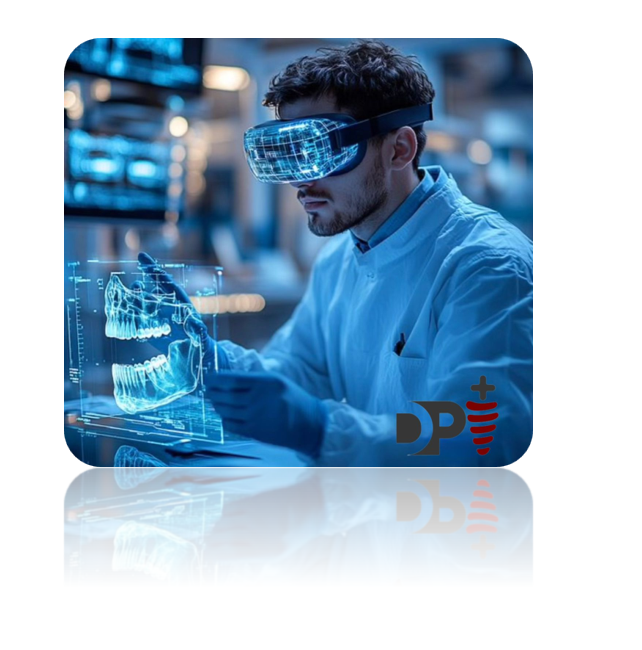
One of the most significant recent developments in dental implants is the integration of digital tools. In the past, implant design and placement depended heavily on the dentist’s experience and skill, but now digital technology has revolutionized the process.
• Intraoral and jaw scanning: Using advanced intraoral scanners, dentists can capture precise 3D images of the mouth, gums, and jawbone in just a few minutes. This method replaces traditional impressions, offering both higher accuracy and a more comfortable experience for patients.
• Digital Smile Design (DSD): Before starting treatment, dentists can simulate the final smile outcome using digital design software. This allows patients to visualize results beforehand and make more informed decisions.
• Computer-guided surgery: Specialized software determines the optimal implant placement, and surgical guides (Surgical Guides) help minimize human error during surgery.
These advancements enable faster, more accurate treatments with higher success rates.
3D Printing and the Creation of Implants :
One of the most exciting emerging technologies is 3D printing. This method is now used not only to manufacture implants but also to produce surgical tools and dental prostheses.
• Customized implants: 3D printing enables the production of patient-specific implants. For example, in cases of severe bone loss, a fully customized implant can be designed to precisely match the patient’s jaw structure.
• Faster manufacturing: Previously, producing implants and dental prosthetics could take weeks. Today, 3D printing can reduce that time to just a few hours.
• Advanced materials: 3D printing technology allows the use of high-strength, biocompatible alloys and ceramics, offering improved durability and performance.
This technology promises a future where patients can receive their implants and full prosthetic restorations within just a few days.
The Role of Artificial Intelligence in Dental Implants :
Artificial intelligence (AI) is rapidly transforming the medical world, and dentistry is no exception.
• More accurate diagnosis: AI-powered software can analyze radiographs and CT scans to identify optimal implant positioning.
• Predicting treatment success: Intelligent algorithms can estimate the likelihood of implant success based on the patient’s history, bone density, and gum condition.
• Continuous learning: AI systems learn from thousands of clinical cases, improving their accuracy over time. This leads to more personalized treatments and higher success rates.
Benefits of These Technologies for Patients :
These innovations offer many practical advantages for patients:
• Shorter treatment time: Patients can enjoy their new teeth in significantly less time.
• More comfort: Digital scanning and 3D-printed components simplify treatment and reduce discomfort.
• Natural appearance: Modern implants closely resemble natural teeth in both function and aesthetics.
• Reduced human error: Digital workflows and guided surgery minimize risks.
The Future of Dental Implants: Personalization and Speed :
With the combination of digital technology, 3D printing, and artificial intelligence, the future of dental implants is moving toward complete personalization—where every patient receives an implant tailored specifically to their anatomical needs. Treatment time and recovery will continue to decrease, resulting in a much smoother and more comfortable experience for patients.
Introducing DPI+ Implants and Boostila Company :
Boostils Company is a domestic manufacturer of dental implants under the DPI+ Implant brand and has always prioritized quality and innovation. DPI+ implants are designed and produced using state-of-the-art technologies. Their high biocompatibility, excellent strength, and reliable clinical outcomes make them a trustworthy choice for dentists and patients alike.
